Skip to main content


Introduction
The Bottleneck Is No Longer Manufacturing. It Is Design.
Additive manufacturing has dramatically expanded what is physically possible to produce. Lattices, conformal cooling channels, organic load paths, monolithic assemblies: shapes unthinkable ten years ago are now printable on industrial machines installed throughout the world.
But a question remains: we can print almost anything, so why are we still designing parts the same way we did twenty years ago?
Today, the concept phase produces too few qualified options under too much pressure. Engineers commit to a single geometry based on one or two manually modelled candidates, with manufacturability, cost, and performance assessed only after the direction is locked. Lightweighting potential is left on the table. Manufacturability surprises appear in week six instead of week one.
Cognitive Design moves all of these evaluations upstream, into the concept phase itself, where correction is fast, and design freedom remains total.
Download the Brochure

What is Cognitive Design?
Cognitive Design is an on-premise concept exploration platform developed by Cognitive Design Systems, a French engineering software company. It is built for engineers working on lightweighting, additive manufacturing, and performance-driven design of mechanical and thermal parts: structural brackets, housings, heat exchangers, battery enclosures, electronics brackets, and engine components.
In a single environment, an engineer can:
- Define a design space (loads, constraints, target manufacturing process, KPI objectives)
- Generate 50 to 100+ variants of any part type using powerful generative methods
- Simulate every variant on the fly with embedded structural and thermal Meshless FEA
- Apply DfAM and DfM rules inside the generation logic to shape the geometry as it is produced
- Compare all variants in a single Design Explorer (mass, stress, cost, CO₂, manufacturability)
- Export the selected concept to any CAD environment
Formats. Import: STEP and STL. Export: STL for direct printing, and a reconstructed STEP produced by the built-in mesh-to-BRep converter, ready to open in any CAD software (CATIA, SOLIDWORKS, Creo, Siemens NX, and others).
Deployment and licensing. Cognitive Design is off-cloud, fully on-premise. Two licensing options: Node-locked (tied to a single workstation) and Floating (shared across a team via a license server).
How it works
5 steps, hours instead of weeks.
1. Define. Import a STEP envelope or build one from scratch. Set loads, material, KPIs, and a target manufacturing process (AM, die casting, 5-axis machining, or injection molding). The process choice drives generation from the first iteration.
2. Generate. Cognitive Design produces 50 to 100+ variants of any part type (brackets, enclosures, heat exchangers, housings, lattice-filled geometries), each manufacturable from the first iteration thanks to DfAM/DfM rules active during generation.
3. Simulate. Meshless FEA evaluates Von Mises stress, displacement, safety factor, and thermal performance on every variant. No meshing, no export to a separate solver. Native thermal and thermo-mechanical analysis for heat exchangers, battery housings, electronics brackets, and engine components.
4. Compare. All variants land in the Design Explorer with their full KPI set (mass, stress, cost per process, CO₂, manufacturability). Filter, sort, and compare side by side, including AM vs die casting on the same axes.
5. Export. The advanced mesh-to-BRep converter turns the selected concept into a clean STEP file that opens in any CAD software. STL is also available for direct printing. No manual reconstruction, no vendor lock-in.


AI-Assisted Design Exploration with Claude (Beta)
Cognitive Design integrates with Claude, Anthropic’s AI assistant, through the Model Context Protocol (MCP). Engineers can drive exploration through natural language directly inside the platform: ask Claude to set up a Design of Experiments, compare manufacturing routes, or suggest parameter combinations to test.
The AI layer decides what to explore. Deterministic solvers compute every result. Geometry, stress, cost, manufacturability: every number is produced by a physics-based solver, not a probabilistic model. Same inputs, same output, every time.
There is no black box. Every parameter is logged and inspectable. Every number was calculated, not predicted. ROI is calculable: mass saved, hours reduced, cost delta are numbers, not estimates.
Currently in Beta, available for testing on request to qualified users.
Proven Results in Production Engineering
Engineering teams using Cognitive Design have reported significant reductions in design time, engineering effort, and component weight by bringing generative design, simulation, manufacturability and cost evaluation into a single automated workflow. The results below are based on real-world production programmes and demonstrate the measurable impact of AI-driven engineering.
| Metric | Result |
|---|---|
| Engineering lead time per part | Reduced by up to 85% |
| Engineering hours saved per part | 50 to 110 hours |
| Average mass reduction | 30 to 45% |
| Design variants evaluated per session | 50 to 100+ |
| Concept geometry maturity | 95% of the final manufactured part geometry |
| Time per variant in part-family workflows | 2 days instead of 2 weeks |
While every project presents unique engineering challenges, the benefits of Cognitive Design are consistent: faster development cycles, improved component performance and significant engineering time savings. Explore the case studies below to see how organisations across multiple industries are applying Cognitive Design to deliver measurable results.
Capabilities that define the platform
Generative Design Methods
Cognitive Design offers three powerful generative design methods, each built for a different engineering intent:
- Topology Optimisation. The classic. Get the lightest, stiffest geometry the load path allows. Level-set engine with full control over volume fraction, refinement, boundary evolution, smoothing, and preservation zones.
- Topology Weaving. Material follows the stress. Concept-stage skeletons generated along load paths from any FRep field, at a fraction of the cost of full topology optimisation.
- Topology Enclosure. Conformal shells around any functional volume. Ideal for housings, covers, and protective structures.

Manufacturing Driven Design (MDD)
In every case, the MDD module actively shapes the geometry during generation according to DfAM and DfM rules:
- Additive manufacturing: overhang correction, minimum wall thickness, self-supporting geometry, support minimisation.
- Die casting: draft angles, undercut detection, parting line placement, mold geometry generation.
- 5-axis machining: tool accessibility verified during generation.
- Injection molding: uniform wall thickness, draft compliance.
Cognitive Design is the only platform that can run the same part through multiple manufacturing processes simultaneously, comparing AM, die casting, and machining side by side on cost, mass, and manufacturability from the first generation run.
Advanced Lattices and TPMS Design
Lattices are where additive manufacturing reveals its full potential, and where Cognitive Design shines.
The platform generates TPMS structures (Gyroid, Schwartz P, Diamond) and lattice geometries natively, with variable density driven by simulation field outputs: denser where stress is high, lighter where it is low. Performance optimised distributions, not uniform fillings.
Because all lattice geometry is represented as implicit mathematical fields, not meshes:
- Smooth, continuous transitions between solid and lattice regions
- File sizes that stay manageable, regardless of complexity
- Density, thickness, and cell type are controlled in 3D space by stress, temperature, or any custom field
- TPMS structures with maximised surface area, ideal for heat exchangers, battery cooling plates, and lightweight aerospace structures

Meshless Mechanical and Thermal Simulation
Structural simulation uses the Immersed Method of Moments, a meshless FEA approach that operates on implicit geometry without requiring a surface or volume mesh. This removes the meshing bottleneck entirely and allows simulation to run continuously during generation.
Mechanical, thermal and thermo-mechanical simulations are native in the same workflow: Von Mises stress, displacement, temperature fields, and heat flux. Simulation results can drive geometry adaptation in real time: lattice density, shell thickness, and ribbing distribution all respond to the computed field using the Simulation Driven Design method.
Simulation Driven Design (SDD)
When the first generation pass is not enough, SDD refines geometry directly from simulation results. Run an analysis, extract a field (stress, displacement, temperature), feed it back into the design: lattice density, shell thickness, and ribbing adapt. The geometry literally responds to physics. Ideal for parts where every gram or every degree counts.

Field Driven Design and Implicit Modelling
Geometry is defined as mathematical fields, not discrete meshes. Density, thickness, lattice type, and surface curvature can be driven continuously by any scalar or vector field: stress, temperature, displacement, or custom distributions. Geometry that responds to physics at every point. This is the foundation of TPMS, variable-density lattice, stress-guided Topology Weaving, and SDD.

Mesh-to-BRep Reconstruction and STL to STEP Export
Optimised geometries produced by topology optimisation or lattice design are inherently mesh-based outputs. Cognitive Design reconstructs these automatically into BRep geometry and exports clean STEP or IGES files, ready for detail design, tolerance specification, and manufacturing preparation in any CAD environment.
No manual surface reconstruction. No third-party conversion tool required. This closes the loop between concept exploration and the downstream CAD chain without any manual intervention.
Design Explorer
A single dashboard consolidates mass, Von Mises stress, displacement, safety factor, cost per manufacturing process, CO2, and manufacturability score across all generated variants. Every design decision is timestamped with its generation parameters, solver inputs, and KPI outputs. Comparison is visual and tabular. The first export from the Design Explorer is already a complete, traceable design selection record.

Reusable Workflows that Compound Engineering Knowledge
Every successful exploration can be saved as a parametric template: rules, constraints, solver logic, and manufacturing settings encoded once, applied to subsequent parts by changing inputs only. The next bracket in a part family takes hours instead of weeks. Methodology grows with each program instead of resetting with each hire.

Trusted by Leading Engineering Teams
From aerospace and defence to advanced manufacturing, Cognitive Design helps engineering teams accelerate product development, optimise performance and reduce design effort. Trusted by organisations including Mitsubishi Electric, Safran, Thales and Logitech, the platform delivers measurable engineering improvements across a wide range of industries.
Explore the case studies below to see how organisations are applying Cognitive Design to solve real engineering challenges.


Why Partner With Measurement Solutions?
Choosing the right engineering software is only part of the solution. Successful implementation requires the right expertise, support and industry knowledge.
As the UK reseller for Cognitive Design, Measurement Solutions provides personalised demonstrations, technical consultancy, onboarding and ongoing support to help engineering teams adopt AI-driven design with confidence and achieve measurable results from day one.
Add ons
Related products
HandyScan

Now more portable and faster than ever before at delivering accurate and high resolution 3D scans.
Find out more
MetraScan

The combination of the arm-free handheld MetraSCAN 3D scanning system & the C-Track dual-camera sensor forms a unique duo that generates the most accurate measurements in the laboratory or on the shopfloor.
MaxShot
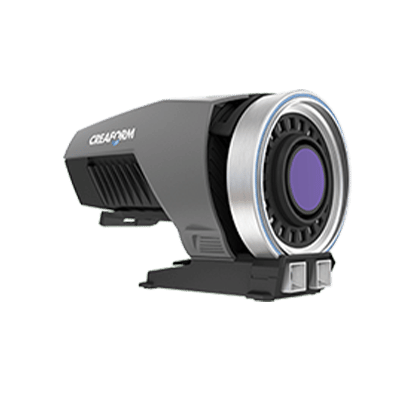
The all-new MaxSHOT 3D Next is a game changer for product development, manufacturing, quality control and inspection teams.
Find out more
Stay Connected
For the latest industry information sign up to our newsletter today