Skip to main content


Production-Ready Industrial CT Inspection
COREX is a high-speed industrial computed tomography system designed specifically for production environments. It enables non-destructive inspection of internal and external features, delivering complete volumetric measurement data in seconds.
By combining advanced CT imaging with intuitive inspection software, COREX allows manufacturers to identify internal defects, verify complex geometries, and perform dimensional analysis without dismantling or damaging components.
The result is faster inspection, deeper insight into part quality, and reliable measurement directly within the production workflow.

COREX | Shop Floor CT

Why COREX is unique
COREX is designed to bring industrial computed tomography directly into production environments, delivering fast, reliable volumetric inspection without the complexity traditionally associated with CT systems.
Unlike conventional inspection methods, COREX enables manufacturers to analyse both internal and external features simultaneously, providing deeper insight into part quality while reducing inspection time.
With high-speed scanning and intuitive inspection software, COREX makes advanced CT inspection accessible for everyday manufacturing workflows.
Inspection Capabilities | Comprehensive CT Analysis in One System
COREX provides powerful inspection capabilities that extend far beyond traditional measurement methods.
• Internal and external dimensional measurement
• Porosity and defect detection
• Geometric tolerance inspection
• CAD comparison with colour deviation maps
• ISO-compliant tolerance reporting
By capturing complete volumetric datasets, COREX allows manufacturers to analyse complex components in ways that are impossible with traditional contact measurement systems.


Key Features | Fast, Accurate and Production-Ready
COREX combines advanced CT technology with an architecture designed specifically for production environments.
• High-speed CT scanning for production inspection workflows
• Fixed inspection volume for consistent, repeatable measurements
• Automated inspection processes for efficient operation
• High-resolution volumetric data capture
• Seamless integration into manufacturing quality control processes
These features enable manufacturers to perform advanced inspection tasks quickly and reliably without interrupting production.
Operational Advantages | Efficient and Non-Destructive Inspection
Industrial CT inspection offers significant advantages over traditional inspection methods, particularly when analysing complex or enclosed components.
• Inspect internal features without dismantling parts
• Detect hidden defects such as porosity and inclusions
• Reduce inspection time compared with destructive testing
• Gain complete visibility into part geometry and structure
COREX makes these capabilities accessible directly on the shop floor, helping manufacturers improve quality control while maintaining production efficiency.


About READY
READY Metrology is a specialist metrology brand focused on bringing professional measurement technology directly to the workshop floor.
Traditional measurement systems are often too complex, too delicate, or too costly for real production environments. READY systems are designed to overcome these challenges, delivering reliable and accurate measurement solutions that integrate easily into everyday manufacturing workflows.
The result is professional metrology that is robust, accessible, and ready for use where parts are actually made.
CT Scanning FAQs
What is industrial CT scanning?
Industrial CT scanning is a non-destructive inspection method that uses X-rays to create a complete 3D volumetric model of a component, allowing both external geometry and enclosed structures to be analysed within a single dataset
How accurate is CT scanning?
Accuracy depends on factors such as part size, material density, geometry, and scan resolution. Smaller, lower-density components typically achieve higher levels of detail than larger or denser parts.
Can CT scanning detect internal defects?
Yes. CT scanning is widely used to identify defects such as porosity, voids, inclusions, and cracking without cutting the component open.
Can CT scanning measure hidden or inaccessible geometry?
Yes. One of the key advantages of CT scanning is the ability to analyse enclosed or otherwise inaccessible geometry that cannot be reached using conventional measurement methods.
Are all CT scanners the same?
No. Different CT systems are designed for different applications. Some are optimised for ultra-high-resolution inspection of small components, while others are designed for larger or denser parts or faster production-focused inspection workflows.
Do different CT systems support different part sizes?
Yes. Maximum part size and achievable resolution depend heavily on the CT system being used. Larger parts can typically be scanned, but often with lower achievable detail than smaller components.
Can assembled parts be inspected using CT scanning?
Yes. CT scanning allows complete assemblies to be analysed without disassembly, making it possible to assess alignment, fit, and internal structure.
Can components be scanned whilst packaged or pre-assembled?
In some applications, yes. CT scanning can allow components to be inspected while packaged or pre-assembled, helping reduce handling and minimise the risk of deformation or damage.
What materials are best suited to CT scanning?
Lower-density materials such as plastics, composites, carbon fibre, aluminium, titanium, and lightweight alloys typically produce the best CT scanning results.
Does material density affect CT scan quality?
Yes. As material density and thickness increase, X-ray penetration becomes more difficult. This can reduce image quality and introduce artefacts within the scan data.
Why would CT scanning be chosen over optical scanning or probing?
CT scanning can be advantageous where contact-based or optical measurement methods struggle, particularly with delicate components or challenging surface characteristics.
Can CT scanning measure soft or delicate components?
Yes. Because CT scanning is non-contact, soft or delicate components can often be inspected without deforming the part during measurement.
How long does a CT scan take?
Scan times vary depending on part size, material, complexity, and resolution requirements. Additional time is also required for reconstruction and analysis of the scan data.
Is CT scanning expensive?
CT scanning is generally more resource-intensive than conventional inspection methods. However, it can provide significant value where complex geometry, hidden structures, or non-destructive defect analysis are required.
When should CT scanning be used instead of other inspection methods?
CT scanning is most valuable where conventional inspection methods cannot fully access or analyse the required information, particularly for hidden geometry, internal defects, complex assemblies, or delicate materials.
Can CT scanning be used in production environments?
Traditionally, industrial CT scanning has been associated with laboratory-based inspection and slower analysis workflows. However, newer CT platforms designed for manufacturing environments, such as the READY CoreX, support faster scan acquisition, rapid reconstruction, and more streamlined inspection processes.
This is helping make CT inspection more practical within production environments where faster feedback, process control, and manufacturing efficiency are increasingly important.
Can Measurement Solutions assess whether CT scanning is suitable for my application?
Yes. Measurement Solutions can review CAD data, drawings, materials, geometry, and inspection objectives to assess feasibility and recommend the most appropriate inspection approach.
READY TO BRING INDUSTRIAL CT INSPECTION TO THE SHOP FLOOR?
Access full technical specifications and detailed performance information for production-ready industrial CT inspection systems.
Download the full data sheet or contact our team to discuss your production inspection requirements.
Add ons
Related products
Metrolog X4
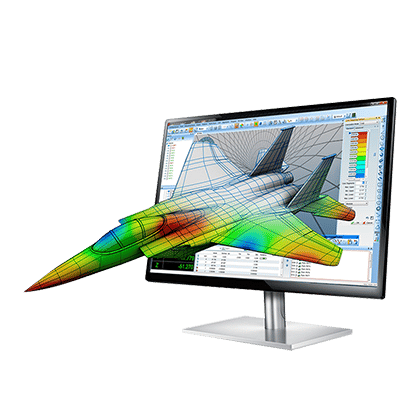
A real performance accelerator for your 3D measuring devices, Metrolog X4 is the latest evolution of Metrologic Group’s world-renowned 3D inspection software.
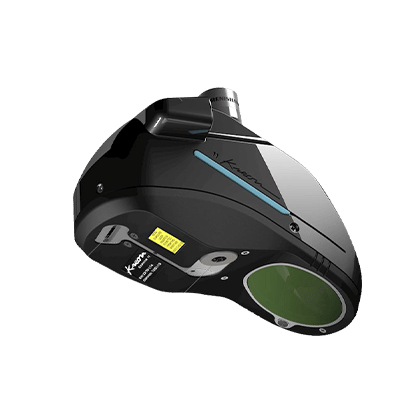
RoboSCAN-R
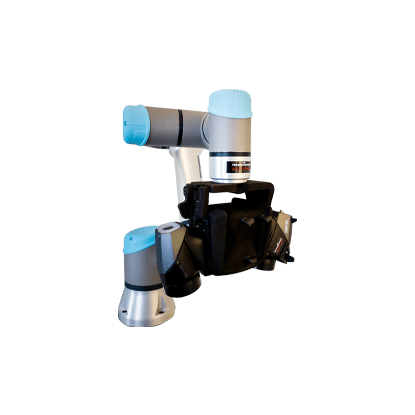
The Robo SCAN-R is an integrated package utilising the Creaform HandySCAN with a 6 axis Universal Robot. Our ‘off-the shelf’ solution is completely integrated with a specially designed portable workstation, inclusive of rotary table.
Stay Connected
For the latest industry information sign up to our newsletter today